
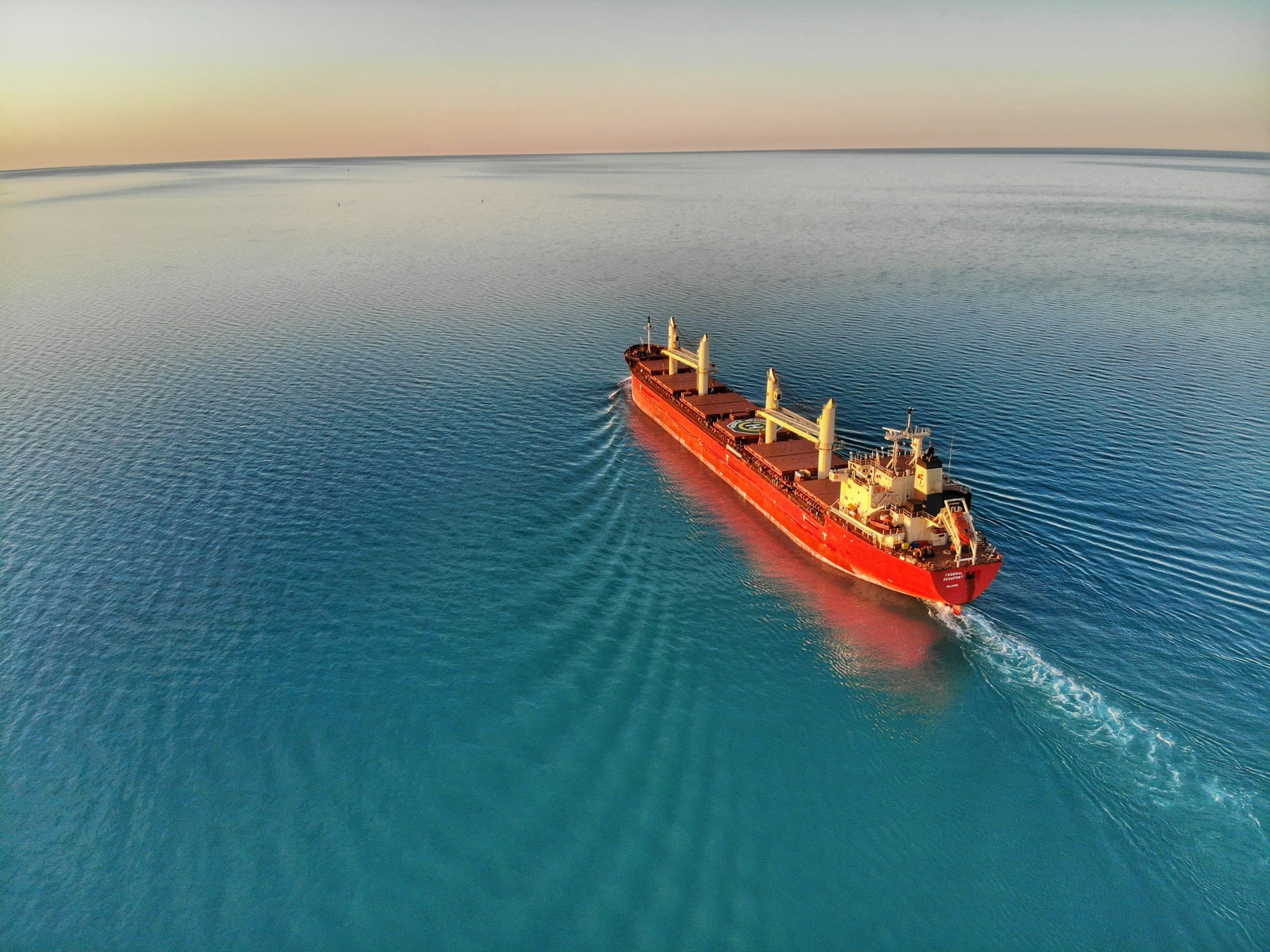
Read the ship.
Understand the change.
Draft survey inquiries for commercial vessels carrying dry-bulk cargo through Gulf Coast port areas.
Request a ship surveyMeasurements are only
part of the record.
A ship draft survey compares displacement at agreed stages around cargo operations. The survey scope may include draft readings, water density observations, ballast or deductible measurements, hydrostatic information and applicable corrections.
The specific sequence depends on the vessel, operation, access, documents available and the parties' requirements. Results should be read with their stated assumptions and limitations.
Read the draft survey overviewDraft marks meet
the waterline.
Readings are interpreted with the ship's relevant hydrostatic information and observed conditions. This diagram is illustrative only; it has no editable measurements or calculation logic.
Illustrative reading locations
What may be considered.
Final scope is confirmed for the vessel and engagement; not every item applies to every survey.
Petroleum coke, anodes, metal products and scrap.
Current cargo scope and attendance are confirmed with the team for each request.
Before the vessel calls.
Which draft marks are observed?
The attending surveyor determines the necessary observations for the vessel and survey scope. Forward, midship and aft readings on both sides are commonly considered, subject to access and conditions.
What vessel information may be needed?
Relevant hydrostatic particulars and vessel data, tank or ballast information, and records of other onboard weights may be needed. The team can clarify what is available and appropriate for the specific ship.
Can a report guarantee bill-of-lading or insurance acceptance?
No. The parties' contract and applicable policy requirements govern acceptance. Confirm reporting requirements with the instructing parties before the operation.
Start with the vessel and operation.
Share the port, expected timing and cargo context. Your request is not a confirmed booking.